7 Steps of the Toronto Pearson Gold Heist That Fooled an Airport
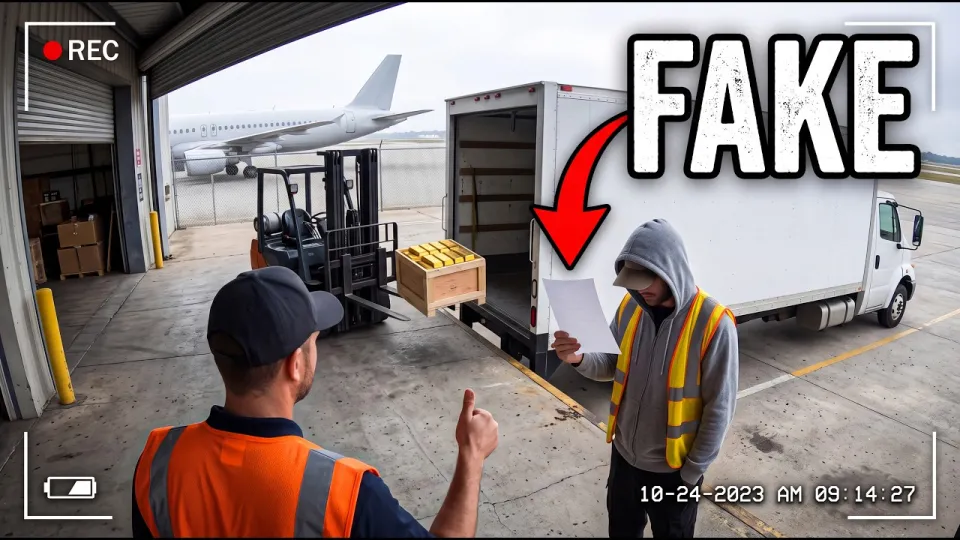
Video: Airport Has No Idea It Just Handed $20M in Gold to Thieves (crime story)
· based on the channel Max Crime
Key takeaways
- An Air Canada flight landed at Toronto Pearson with 6,600 gold bars in one metal container, valued at roughly C$20 million.
- Thieves used a fraudulent waybill for a fish shipment that had already been picked up a day earlier.
- A white truck backed up to the Air Canada cargo warehouse and the cargo was loaded and driven away.
- The theft exploited routine cargo-release procedures rather than any breach of vaults or armed guards.
- Max Crime reconstructs the sequence in 3D, since the scenes are illustrations, not real footage.
A crime story about the Toronto Pearson gold heist comes down to one uncomfortable truth: the airport handed over roughly C$20 million in gold because a piece of paper looked right. In April 2023, a single metal container holding 6,600 gold bars arrived at Toronto Pearson International Airport on an Air Canada flight, and within hours it was driven out of the cargo facility on a white truck. No alarms, no armed confrontation — just a fraudulent waybill and a routine release procedure that nobody questioned in time.
What actually arrived on the Air Canada flight
The shipment at the centre of this crime story was ordinary cargo on paper and extraordinary in value. A flight from Zurich landed at Toronto Pearson carrying gold that had been refined and was moving through the secure logistics chain toward a Canadian buyer. The entire consignment — 6,600 bars — sat inside one metal container, which is exactly how high-value freight normally travels: consolidated, sealed, and tracked as a single unit rather than as thousands of individual items.
That detail matters. A container is only as secure as the paperwork that releases it. Once the shipment was unloaded and moved into the Air Canada cargo warehouse, the gold stopped being a physical problem for security and became an administrative one. Whoever controlled the documentation controlled the gold.
Step 1 — Learn the layout of the cargo terminal
Cargo warehouses at major airports are built for speed, not suspicion. Trucks arrive, drivers present documents at a counter, staff verify the reference, and freight is released to the loading dock. The Pearson facility followed that pattern: a commercial cargo operation handling thousands of shipments, where a driver with a plausible waybill is a normal sight rather than an anomaly.
Any crew planning a gold heist has to understand this rhythm first. The thieves did not need to defeat cameras, guards or vaults; they needed to know which counter to approach, what a legitimate release document looks like, and when the warehouse is busy enough that a new face at the window raises no questions.
Step 2 — Pick a shipment that hides in plain sight
The fraudulent document presented at the warehouse was not for gold. It claimed a pickup of fish — seafood that, according to the paperwork, had already been collected the day before. That choice was deliberate. A fish shipment is low-value, perishable and utterly unremarkable; a clerk glancing at a seafood waybill has no reason to escalate anything.
Using a decoy commodity is a classic move in cargo theft. The document does not need to be perfect, only consistent enough to match a record in the system. The thieves were not asking staff to believe something strange; they were asking them to process something boring.
Step 3 — Forge a waybill that fits the system
A waybill is the spine of air cargo: it carries the shipment reference, the consignor and consignee, the commodity, the weight and the release instructions. The document used at Pearson replicated that structure closely enough to be entered into the release process. It referenced a real shipment pattern — fish that had moved through the same facility — which is what made it believable.
The weakness it exposed is procedural rather than technical. When a reference exists in the system and the commodity is low-risk, verification tends toward confirmation rather than investigation. A forged waybill does not have to fool an auditor; it has to survive a few minutes at a counter.
Step 4 — Arrive with the right vehicle at the right hour
Later that evening, a man backed a white truck up to the Air Canada cargo warehouse. The timing and the vehicle were part of the disguise. A plain white truck is the default commercial delivery vehicle in Canada; it attracts no attention in a loading bay full of them. Arriving in the evening meant fewer staff, shorter queues and a faster release.
The crime story here is not one of audacity but of camouflage. The crew behaved like a courier doing a job, and the facility treated them like one.
Step 5 — Collect the wrong container and leave
Staff released the freight against the fraudulent document, and the container was loaded onto the truck. The gold left the airport in the back of an ordinary vehicle while the warehouse records showed a seafood pickup. By the time anyone compared the physical container to the paperwork, the truck was gone.
This is the pivot point of the entire operation. Everything before it was preparation; everything after it was the problem of disappearing with 6,600 bars of gold, which is far harder than taking them.
Step 6 — Let the discrepancy surface on its own
The theft did not announce itself with a confrontation. It surfaced through reconciliation — the moment when a shipment's absence stops being explainable by delay and becomes a missing consignment. Police in the Peel Region, which covers Toronto Pearson, opened an investigation, and the case became one of the largest gold thefts in Canadian history.
The gap between the pickup and the discovery is the real vulnerability. Cargo systems are designed to move freight quickly, and speed depends on trusting documents in the moment rather than re-verifying them afterwards.
Step 7 — Understand why the trail goes cold
Gold is the easiest stolen commodity to launder and the hardest to trace. Bars can be melted, recast, re-stamped and reintroduced into the market through jewellers, refiners and dealers across multiple jurisdictions. A container of gold does not stay a container of gold for long.
That is why investigations into this kind of crime story focus on people as much as metal: who had access to shipment data, who knew the consignment was arriving, and who could produce a waybill convincing enough to pass a counter. The document is the fingerprint.
What the Toronto Pearson case changed in cargo security
The heist pushed airlines and ground handlers to look again at how high-value freight is released. Practical fixes are unglamorous: mandatory callback verification with the consignor before release, separate handling for precious metals, photo identification logged against every pickup, and physical checks that a container matches its declared commodity before it leaves the dock.
None of these measures is exotic. The Pearson case demonstrated that the weakest link in a C$20 million shipment was a counter clerk with a plausible slip of paper and no reason to doubt it.
The bottom line on this crime story
The Toronto Pearson gold heist worked because it never looked like a heist. Six thousand six hundred bars left an Air Canada cargo warehouse on a white truck, released against a forged waybill for fish that had already been collected, and the facility had no idea it had just handed over a fortune. The lesson is that high-value cargo security lives or dies at the release desk, not at the fence. Max Crime reconstructs the sequence with 3D illustrations rather than real footage, and the channel's breakdown is a useful starting point for anyone following how the investigation into the missing gold has developed since.
Questions & answers
How much gold was stolen at Toronto Pearson?
The consignment consisted of 6,600 gold bars carried in a single metal container on an Air Canada flight from Zurich. Its reported value was roughly C$20 million, making it one of the largest gold thefts in Canadian history.
How did the thieves get the gold released to them?
A man backed a white truck to the Air Canada cargo warehouse and presented a fraudulent waybill for a shipment of fish that had supposedly been collected the day before. Staff released the container against that document, and it was loaded and driven away.
Was the theft caught on camera or stopped by security?
There was no armed confrontation or breach of a vault. The operation relied on routine cargo-release procedures, and the discrepancy only surfaced later during reconciliation of the shipment. The 3D scenes in the Max Crime video are illustrative reconstructions, not real footage.
Why is stolen gold so hard to trace?
Gold can be melted, recast and re-stamped, then fed back into the market through jewellers, refiners and dealers in different jurisdictions. Investigators therefore concentrate on shipment data and the people who had access to it, since the forged paperwork is the strongest lead.
Source: Airport Has No Idea It Just Handed $20M in Gold to Thieves (crime story) · Markdown version